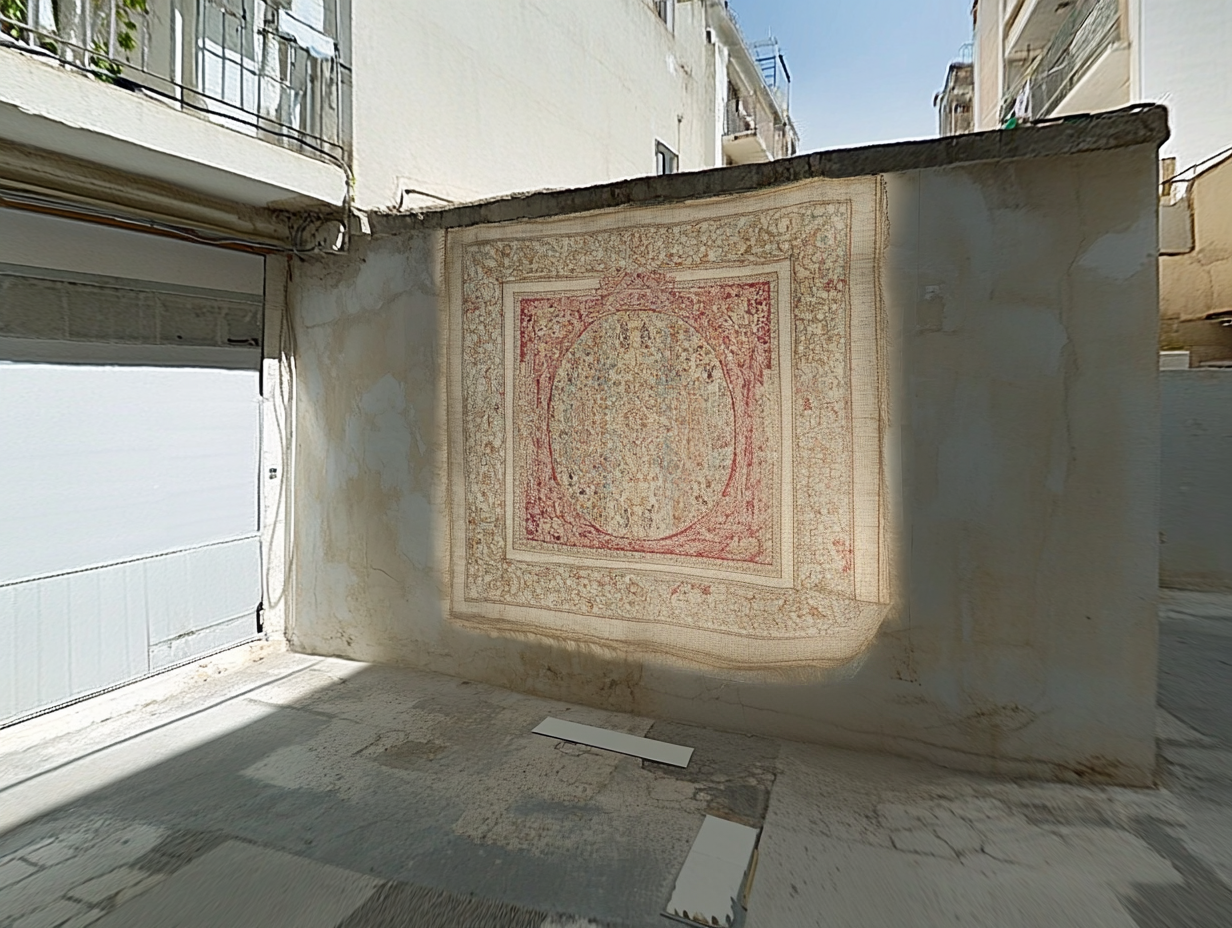
Synoikismos, a historic neighbourhood in Corinth, Greece, serves as a living testament to the Asia Minor refugees who settled there in the 1920s. These communities demonstrated remarkable resilience, carrying with them the vibrant traditions of their homeland, including music, dance, storytelling, and the delicate craft of embroidery, which became a valued expression of their identity. Their legacy is woven into the fabric of Synoikismos in a way that is both indelible and reflective of a profound connection to their roots and a spirit of creativity that continues to inspire.
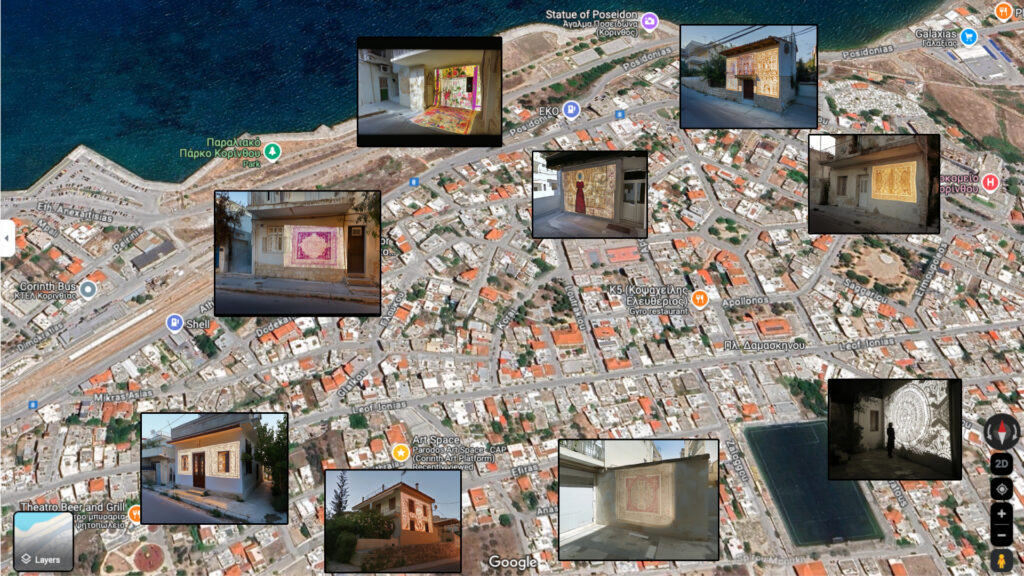
The project, titled ‘Bridging Tradition and Technology’, was proposed to the Municipality of Corinth as an artistic intervention for Synoikismos, the historic neighbourhood of refugees from Asia Minor established in the 1920s.
Before taking physical form in the streets, the project exists virtually as a proposal, a set of renderings, diagrams and written intentions, submitted online. In this suspended state, the project belonged to the wider condition of artistic proposals today, where ideas often circulate digitally before being accepted, funded, rejected or realised. The proposal exists temporarily in this state — neither an idea nor a public artwork yet.
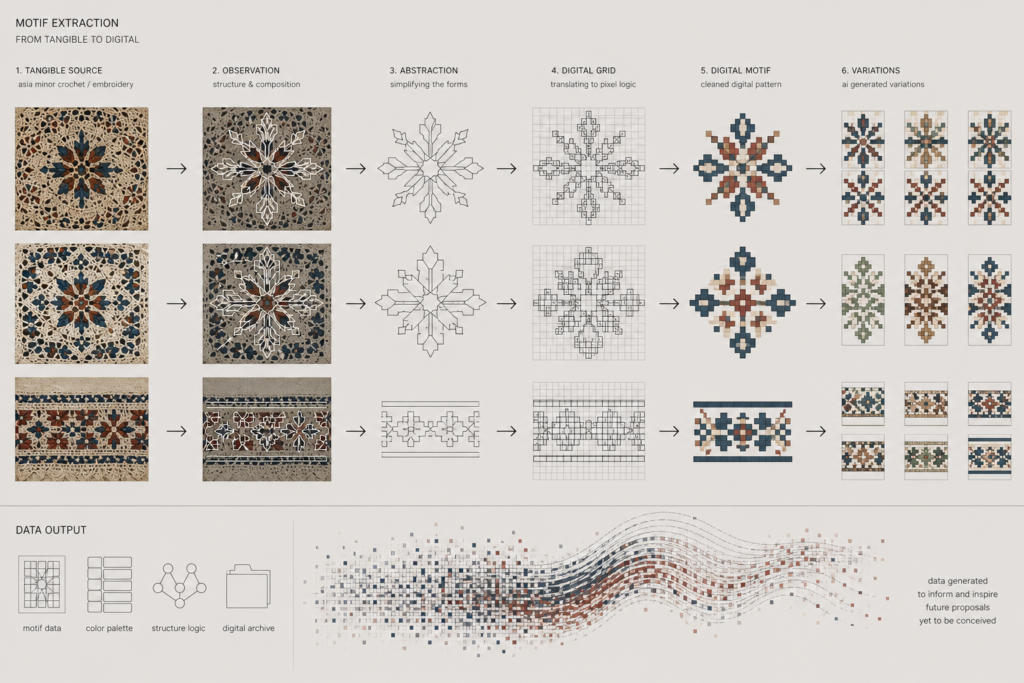
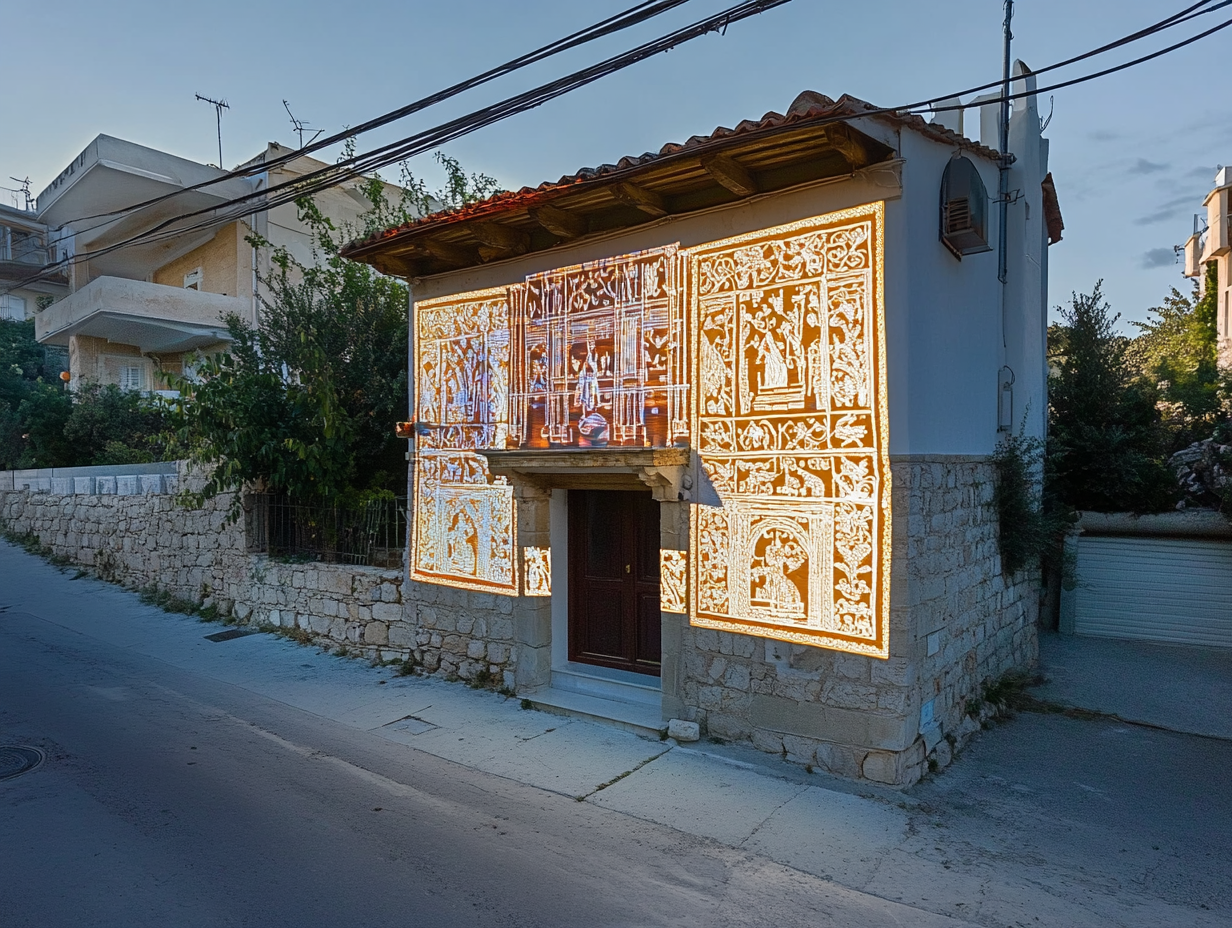
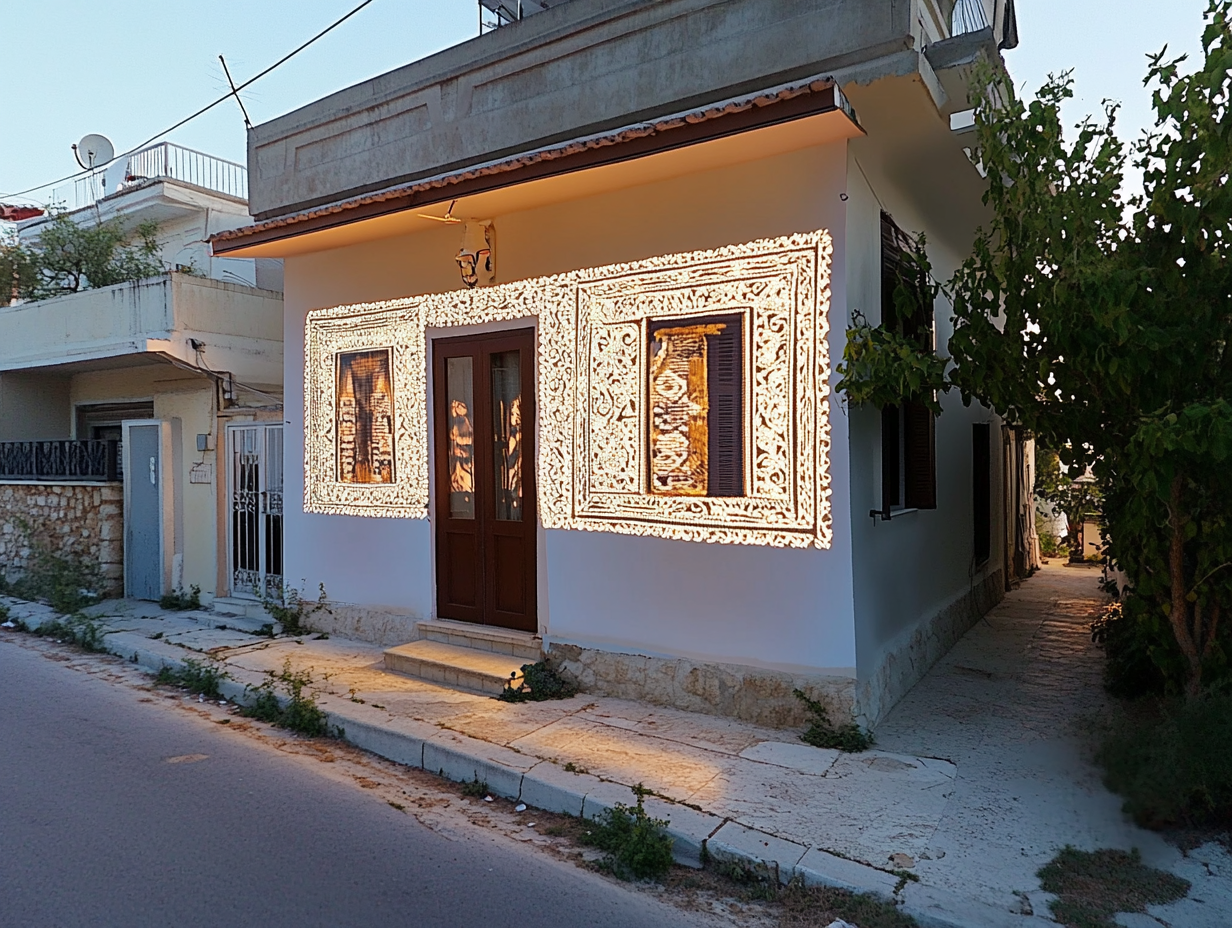
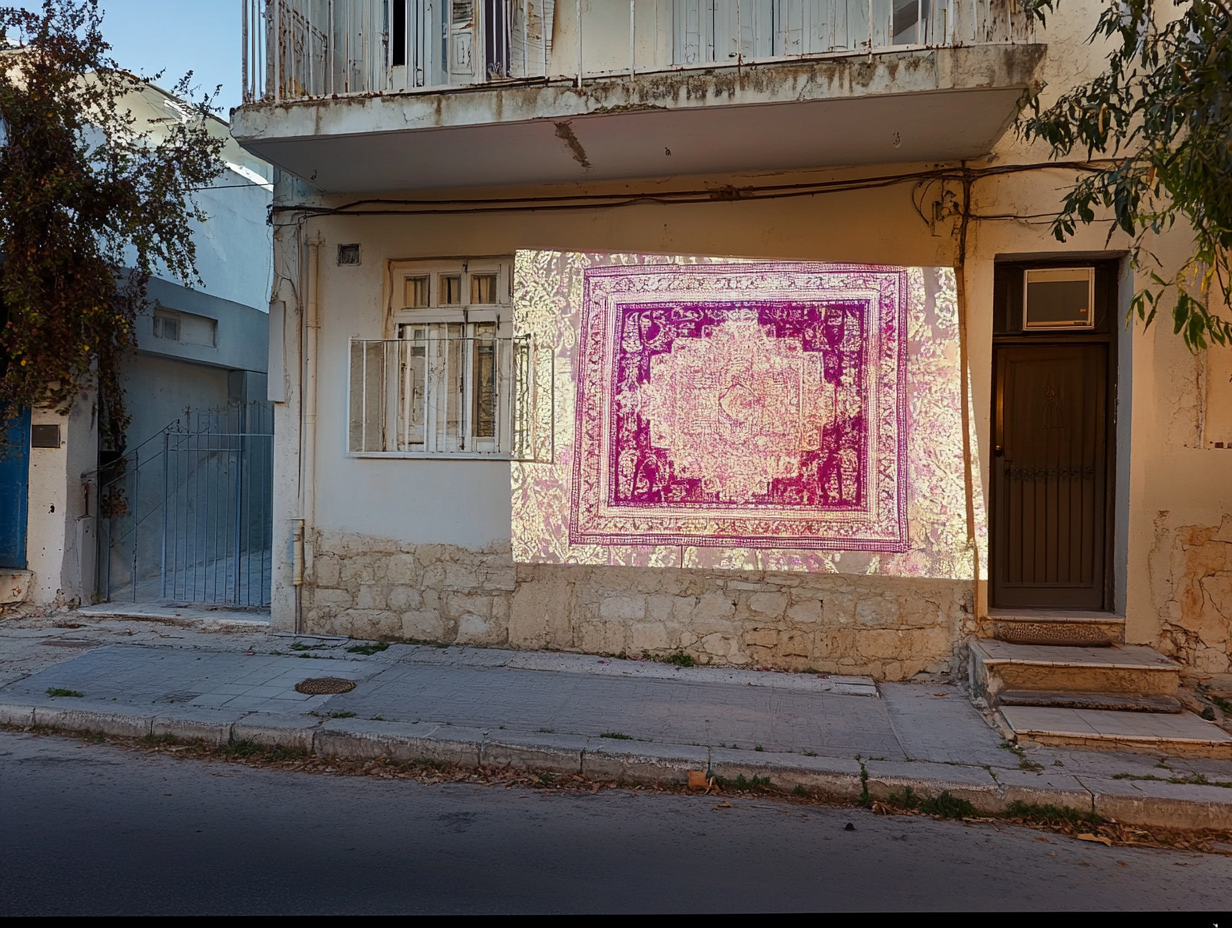
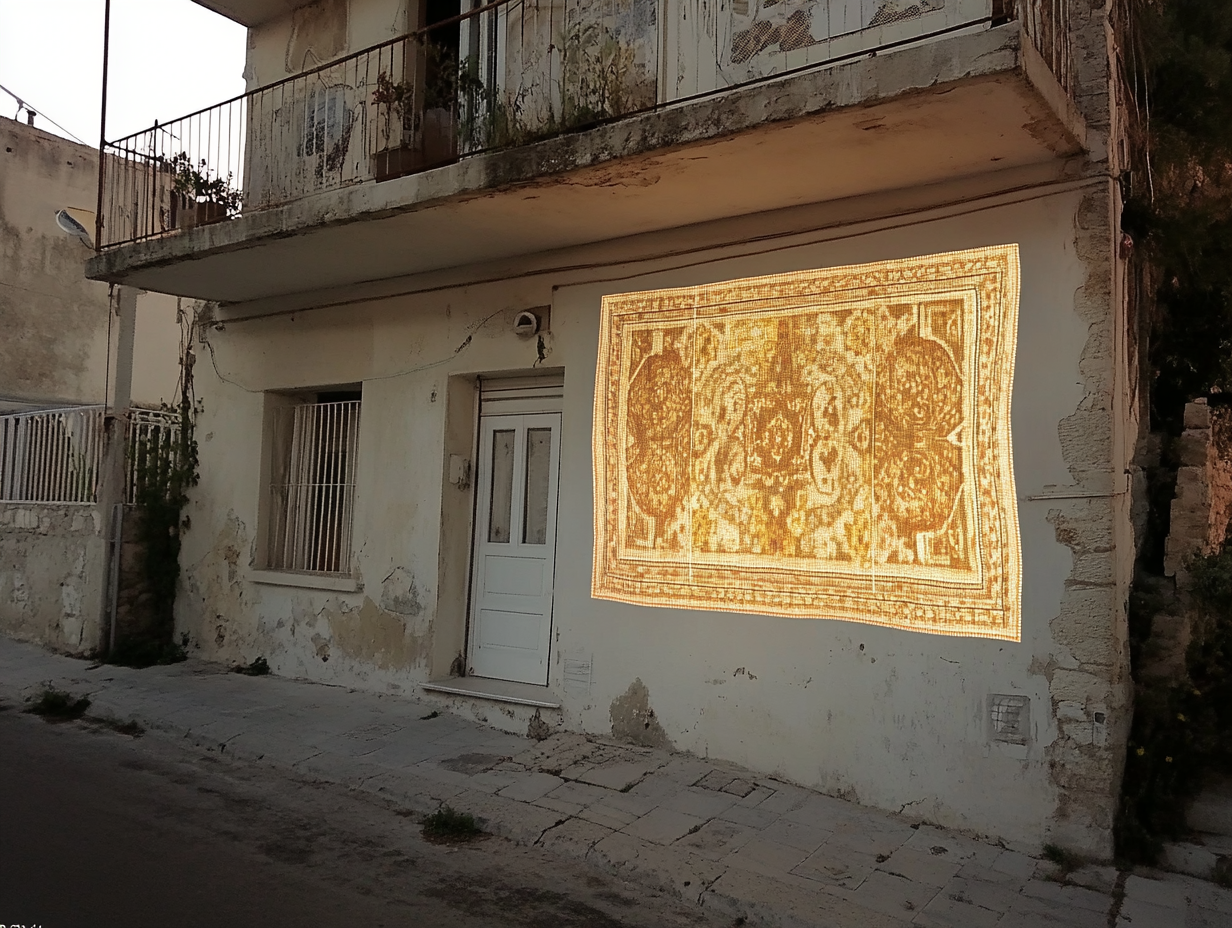
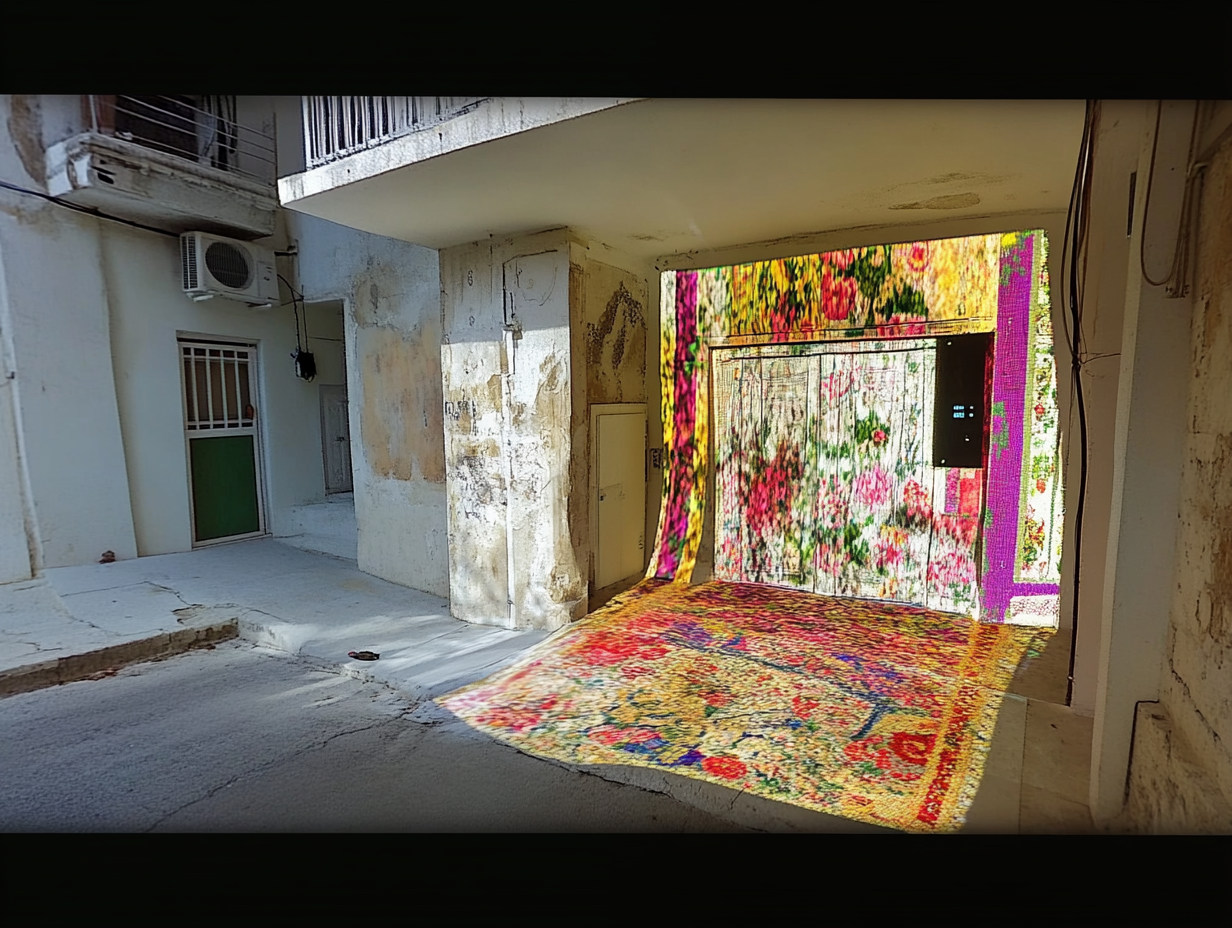
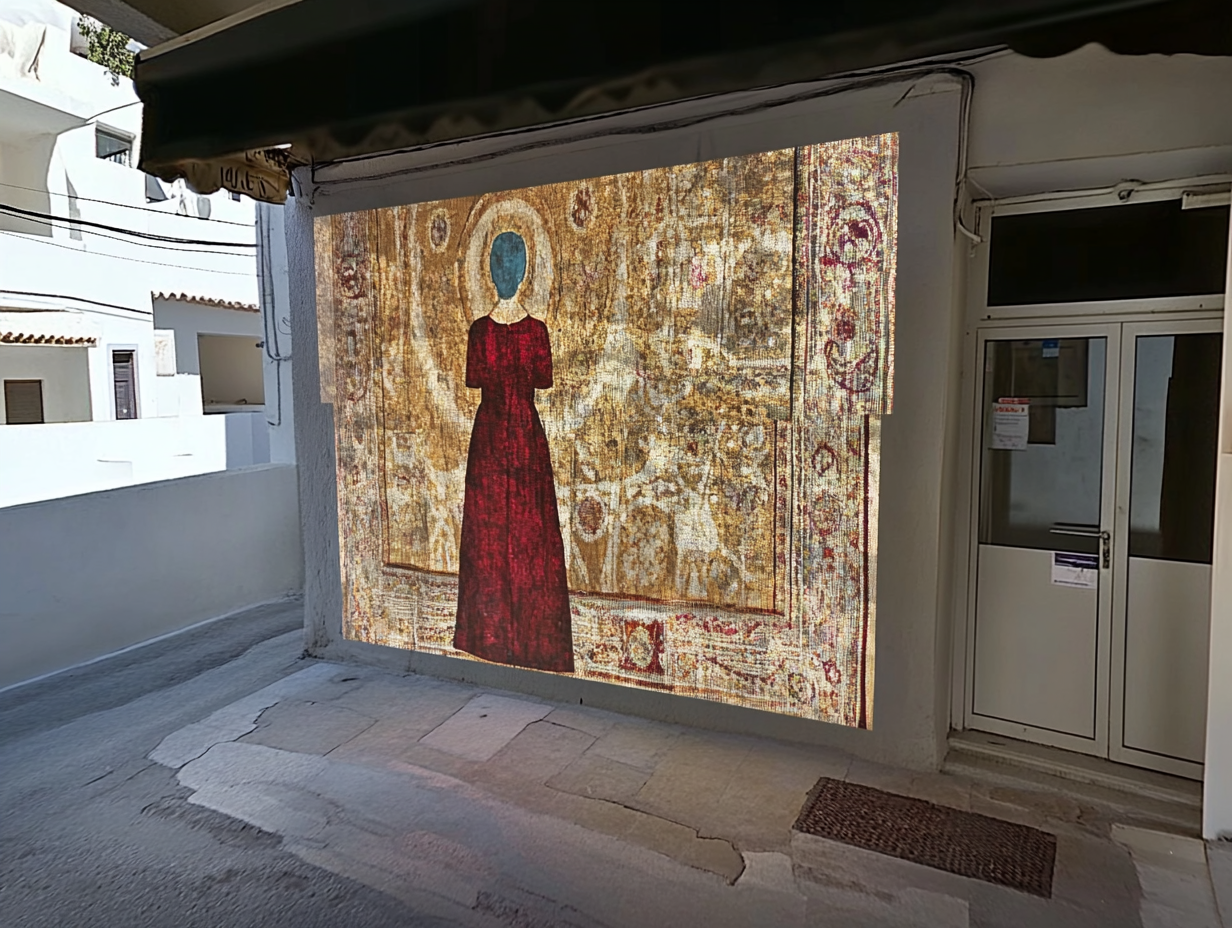
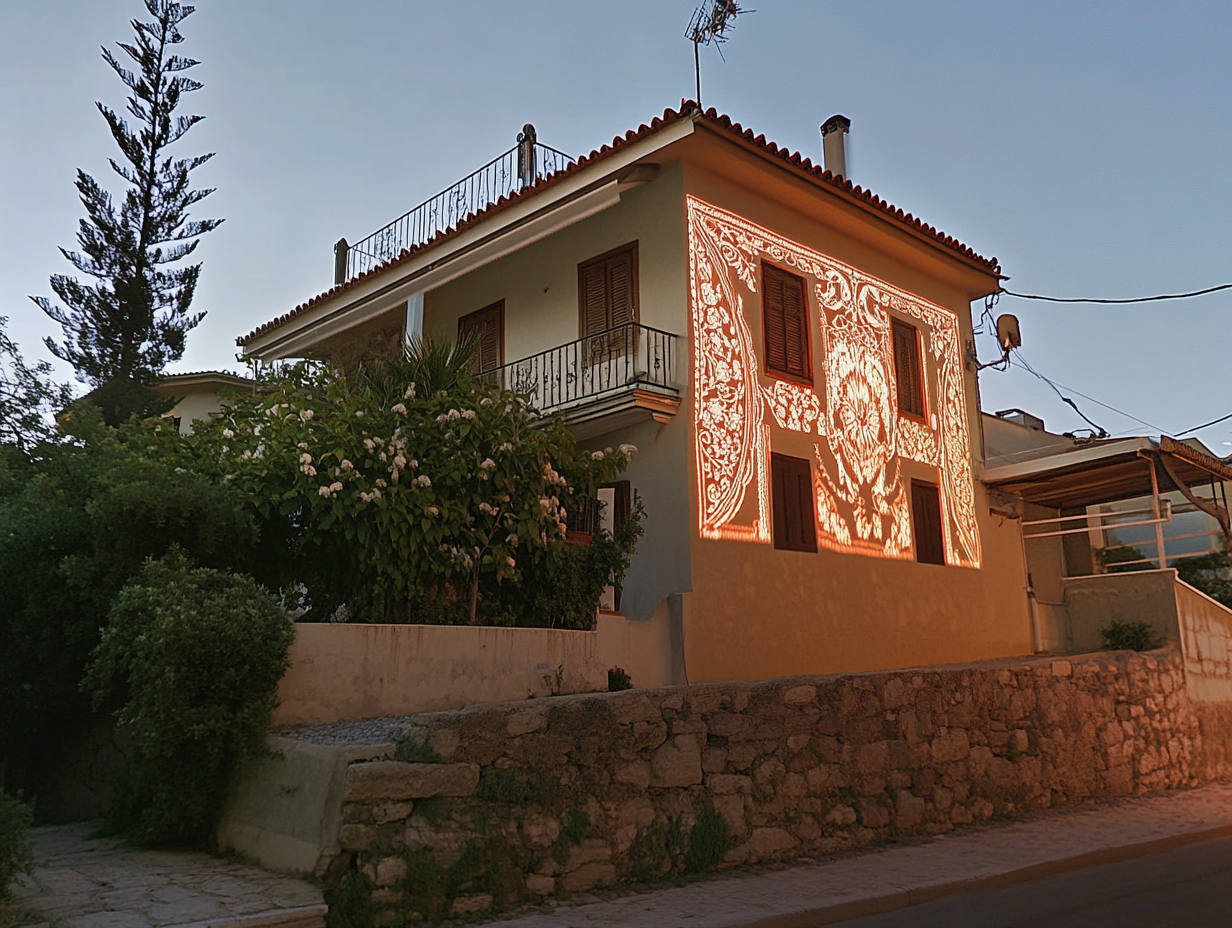
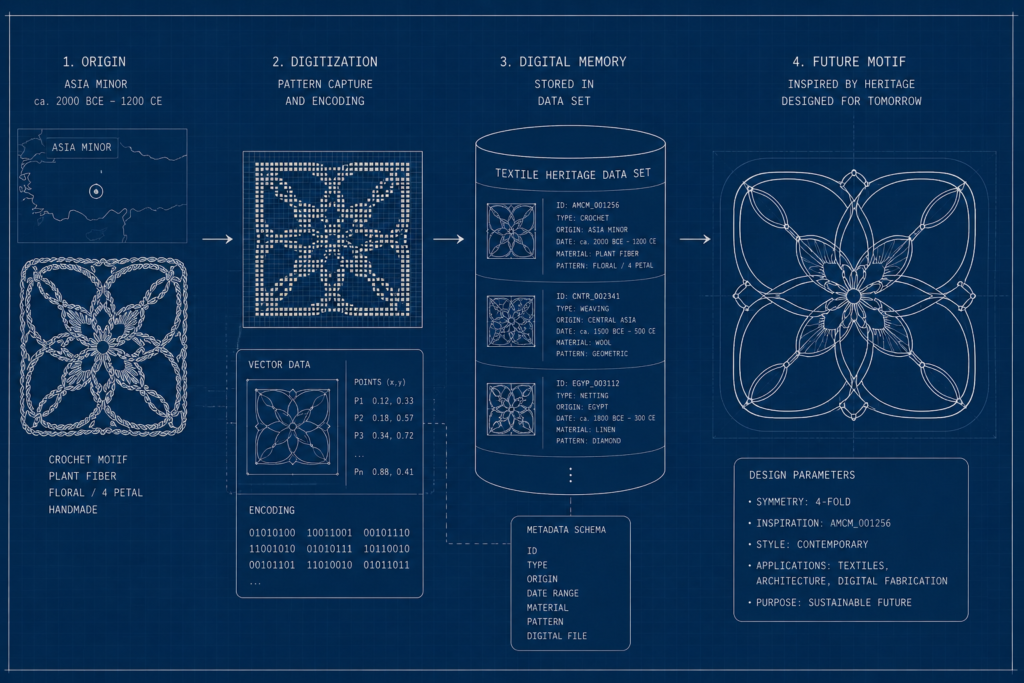
The project involved the use of AI to generate contemporary variations of traditional embroidery and weaving motifs, which would be projected onto the façades of houses in Synoikismos. These projections would transform the neighbourhood into a dynamic open-air gallery where inherited patterns, digital processes, and everyday architecture come together.
The same motif logic also informed the design of lightweight structures and small public hubs. These were conceived as spaces for gathering, memory and exchange, providing temporary frameworks for collective belonging within the existing urban fabric.
In this way, Bridging Tradition and Technology connects the three stages of artistic production: concept, online proposal and possible public realisation. The project considers how artistic projects first exist as images and documents on screens before entering reality and becoming a shared experience.
While simultaneously generating data, references and visual languages that persist beyond them, it reflects on how projects first live as images and documents on screens, before they may enter reality and become a shared experience. These data, references and visual languages inform and shape future proposals yet to be imagined.